Abstract:
In this project I will try to develop an approach to percussion playing, where controlling the instruments internal harmonic qualites will be the subject. I will focus on idophones without an explicit musical pitch related to them. Typical instruments in this category is cymbals, triangles, tam-tams, some kinds of gongs, as well as different non-traditional metal instruments. As these instruments pruduce many rather than one clear pitch, they have often been categorized as ‘untonal’ percussion instruments. This project will however attempt in recognizing these instruments as tonal instruments through sound analysis and experimental practise, and develop a new approach to playing with these instruments.
The project will include an indefinite amount of case-studies of particular instruments, but the the overall goal is to build a general playing practise that can be relevant for all percussion instruments.
Case studies
Study of a wuhan cymbal
Tonal study of my favourite cymbal. It is a wuhan chinese cymbal that I bought in Oslo. It is 48 cm in diameter.
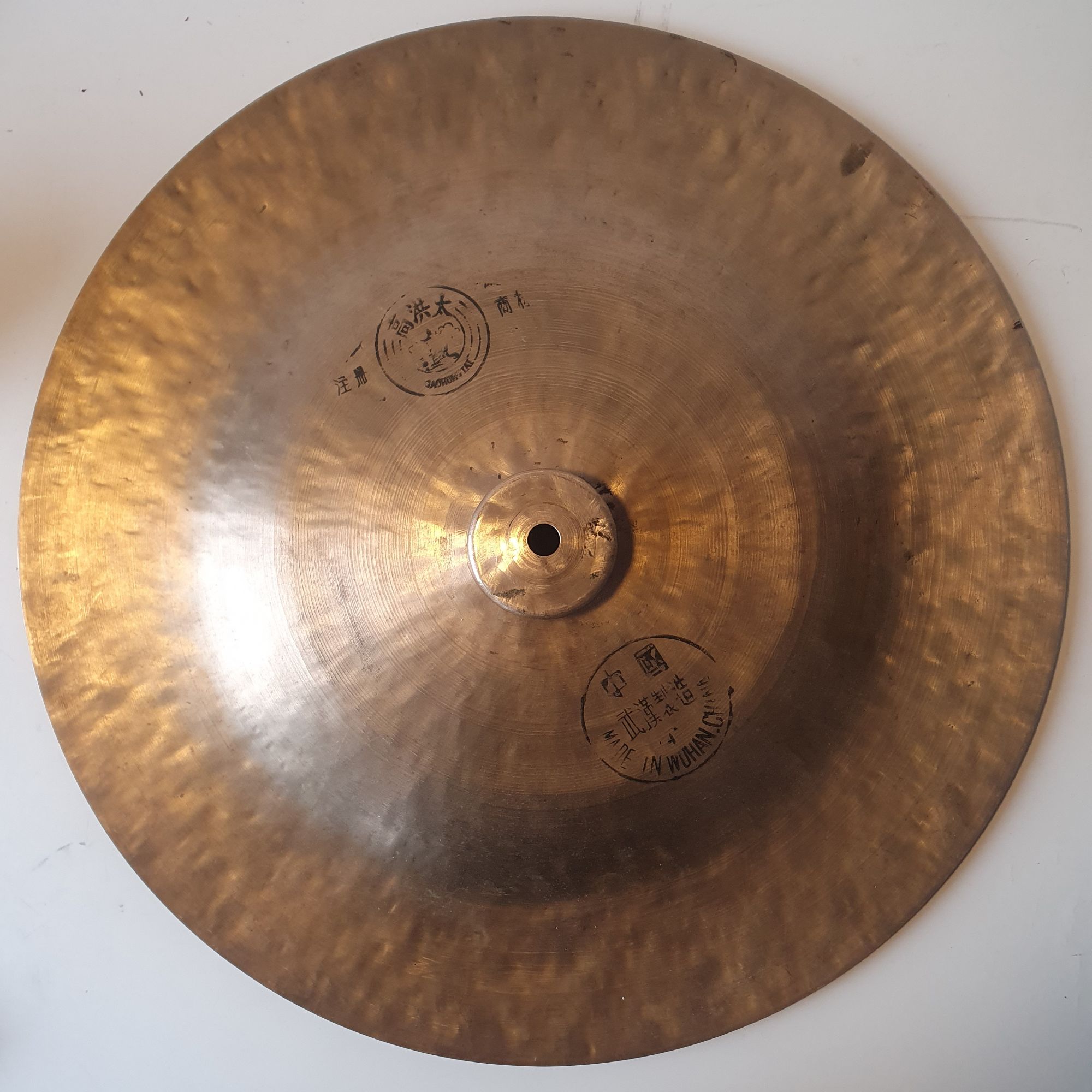
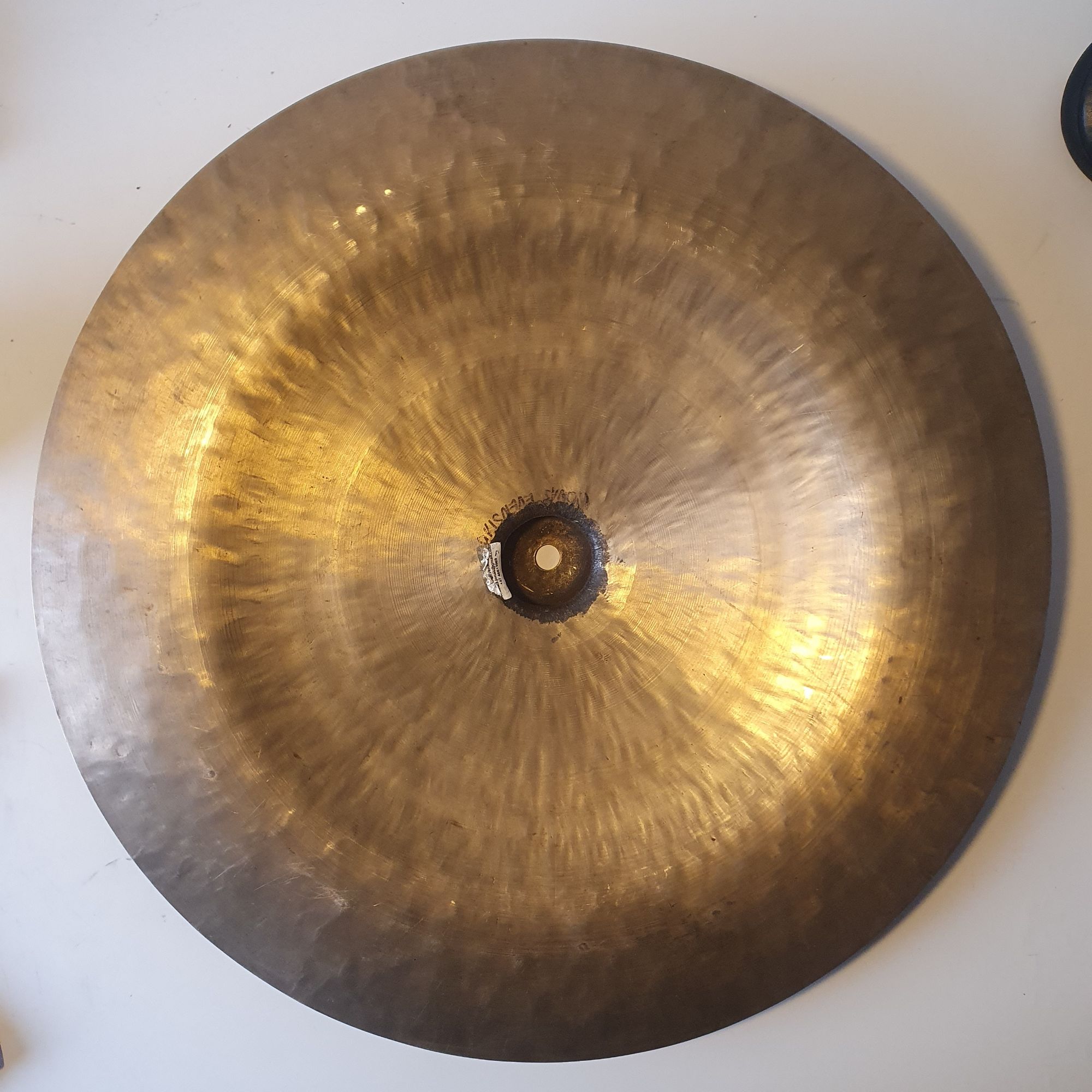
Hypothisis: There are a set of tones within the cymbal that can be identified and played actively with.
Method:
– Categorisation of different areas of the cymbal to be played.
– Spectral analysis of the cymbals sound when played at a particular area.
– Visual identification of present tones and pulses of the cymbals sound.
– Auditive recognition of the identificated tones and pulses.
– Attemt in recreating and emphasizing the tones through exploration of playing-technique within the chosen area.
Aditional questions:
– Will the recognised tones be present in other areas of playing?
– What happens to the tones with change of mallet?
– Can I isolate the tone completely?
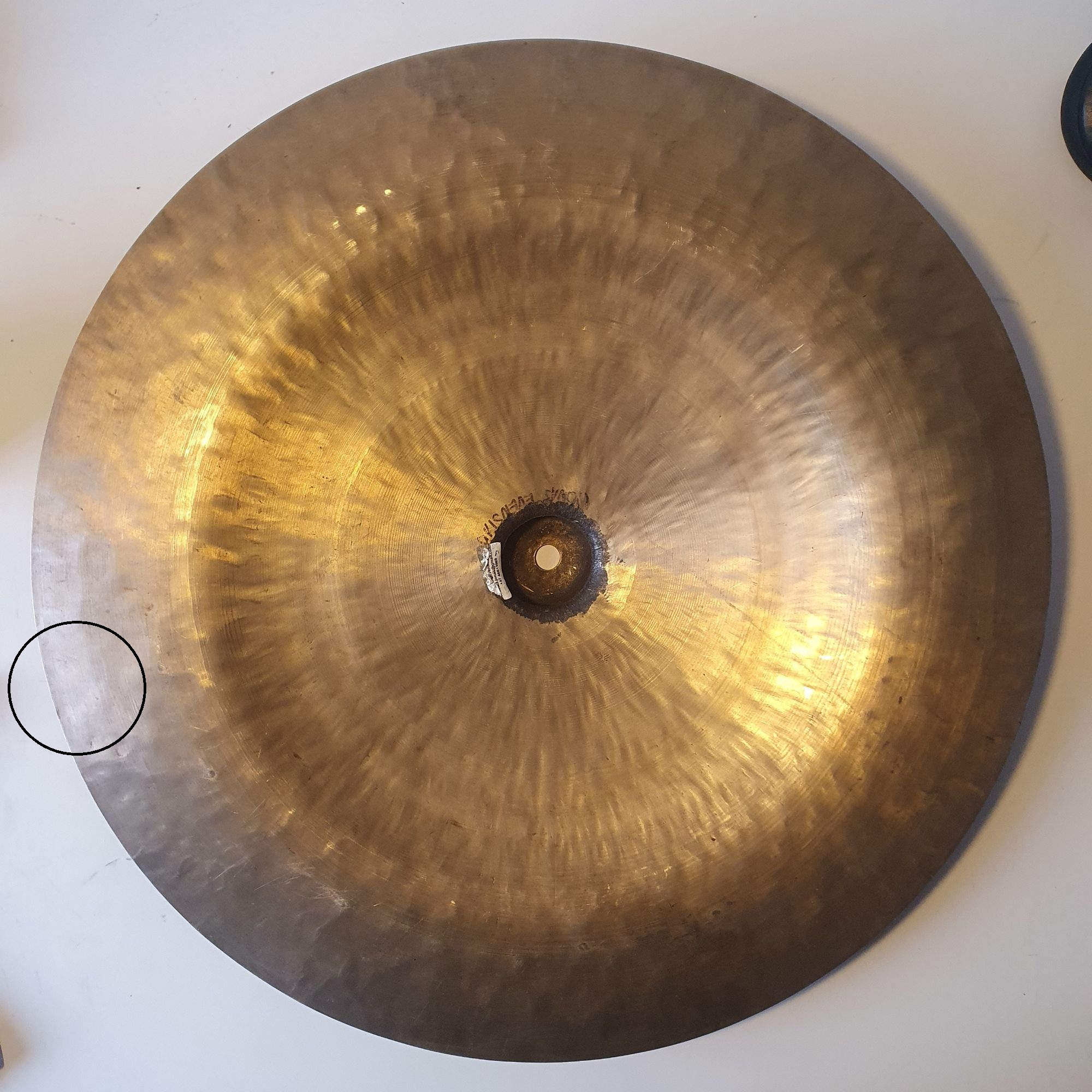
Circle shows general striking point on cymbal.
Mallet: ENCORE NZ2B Nancy Zeltsman (marimba mallet)
Striking point
Spectral analysis of the sound
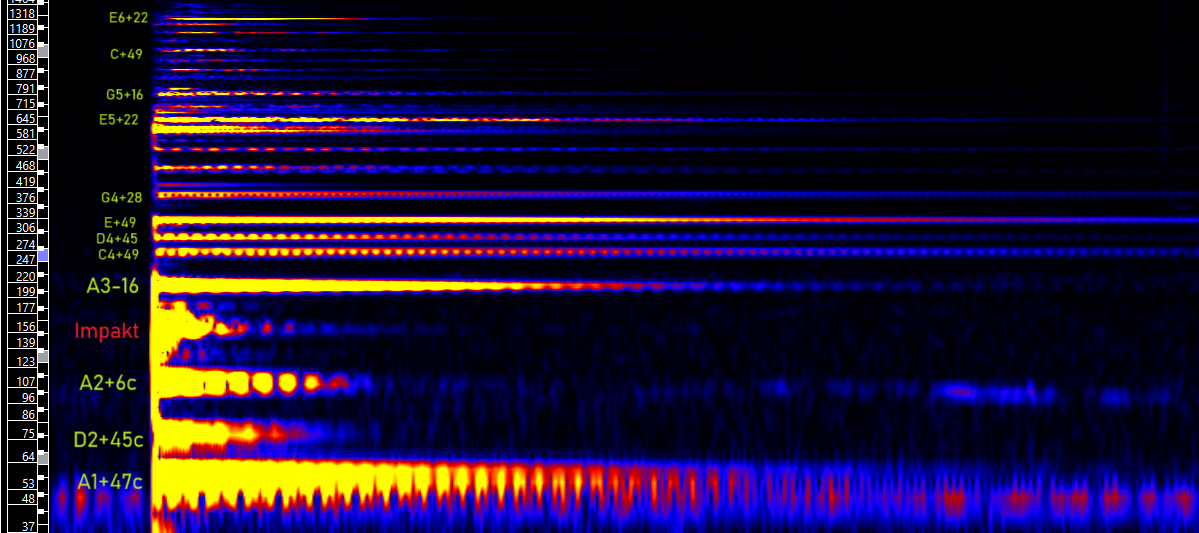
The interval that last the longest is between C4+49 and an E+49.
When I repeat strokes and vary dynamics and articulation, I can hear this interval in general being sustained, but their dynamic relation varies.
Ae-16c, A2+6c and A1+47c, alltough representing some sort of A as a ground tone, are fading quite quick and are not defining the general harmony of the cymbal particulary much. However through varying in technique, I am able to emphasize these tones more, therfore producing something resembeling a A-minor triad.
What I refer to as Impakt seems to represent the very wave that is produced in the strike. This fades very quickly, and concist a cluster of tones, giving the typical sound of a cymbal. (I believe)
What characterises the different tones, is their pulsing. For example: E5+22c has a visually and audativily clear pulse. I do not yet understand what lies behind these pulses what it implicates for playing. These pulses are however great to improvise with, and to use as rythmic material.
 JonasEvenstad